Project ID: STARDUST 
Project Responsible: Dr. Oana Rasoga
Contract: din ()
Project Type: International
Project Program: COFUND-WATER4ALL
Funded by: Romanian National Authority for Scientific Research, UEFISCDI
Contractor: National Institute of Materials Physics
Project Value: 90.000 EURO ( 427.050 RON and co-financing from EU - 22.950 RON)
Start Date: 1 March, 2024
End Date: 28 February, 2027
Hydro-climatic extremes, such as droughts and floods, have increased due to climate change and could lead to severe impacts on socio-economic, structural, and environmental sectors. Soil water assessment models have shown that pesticides are transported into waterways because of intense rainfall events. Current monitoring methods are not suited to the detection of such water quality impacts, which can deplete invertebrate populations and impact biodiversity and ecosystem health very rapidly. Many surface- and groundwaters are used as sources of drinking water, and therefore the occurrence of chemicals is problematic for water treatment facilities. Rapid, real-time sensing technologies do not exist yet but are urgently needed to address this. In October 2022 revisions to the priority pollutant Annex to the Water Framework Directive (WFD), saw the addition of noenicitinoid and pyrethroid pesticides, showing that pesticides are of growing concern. The STARDUST project aims to develop a first-of-its-kind, integrated optical system combined with smart spectral data processing methodology, for multiplexed monitoring of pesticides in surface and ground waters, and to understand the impact of extreme hydroclimatic events on water quality in the context of pesticides occurrence. We will develop a sensor based on surface-enhanced Raman spectroscopy fully integrated with microfluidics targeting the detection of pesticides, pesticide mixtures, and metabolites in surface and ground waters. Secondly, we will use rainfall forecasts to identify sampling times for passive sampling and citizen scientist co-created events, to gather samples that are specifically linked to rainfall events. This will build on existing monitoring programmes, but, more critically, will identify the climate-related water quality impacts. The results of passive sampling will identify target pesticide compounds to be addressed with the developed
novel sensor and a database of detected pesticides will be compiled and shared publicly. The STARDUST project translates several technological advances into an innovative solution for discrimination between safe and contaminated water continuously and in real time. We envision that in the long run, any strategies for mitigation of the hydro-climatic extreme events will need to rely on digitalization and sensors. The proposed activities will benefit a wide range of “problem owners” and society by responding to the need for continuously clean water (SDG 6). Pesticide detection is only one of the existing problems. The proposed solution is also applicable to other harmful compounds adding value and impact. STARDUST primarily targets the topic 2 of the call by proposing physical and digital solutions for “smartening the water system”, but also contributes to the topic 1 as the development will be carried out in the context of adaptation and mitigation strategies to cope with hydro-climatic extreme events, and both experts on the analysis of surface and ground waters are involved.
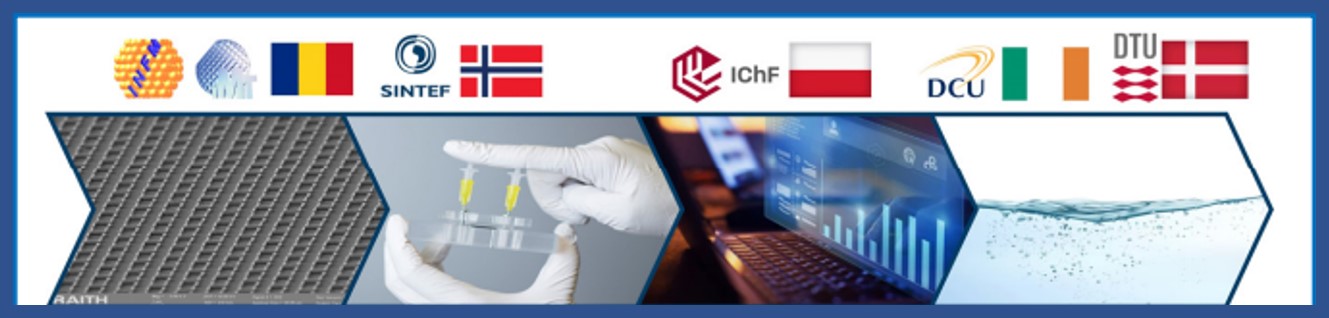
Areas of expertise and roles of partners in the consortium:
- microtechnology, microoptics and microfluidics : SINTEF from Norway, INCDFM and IMT from Romania,
- spectral data analysis: IChF from Poland,
- sampling and surface water analysis: DCU from Ireland
- ground water, sewer overflow and drinking water: DTU from Denmark.
INCDFM team:
Dr. Oana Rasoga - Project leader
Dr. Anca Stanculescu - scientific researcher I
Dr. Marcela Socol - scientific researcher I
Dr. Mihaela Baibarac - scientific reseracher I
Dr. Irina Zgura - scientific researcher I
Dr. Andreea Costas - scientific researcher I
Dr. Carmen Breazu - Postdoc
Dr. Ioan-Alexandru Baragau - Postdoc
Dr. Gabriela Petre - research assistant
Vacant position - Msc student
2024
During the first phase of project implementation, the activities to be carried out were: 1.1Characterization of SERS substrates by EBL and NIL and 1.2 Dissemination and management. The estimated results after the first year of implementation according to the activities and general plan of the project were: (1)Report on the partial characterization of SERS substrates; (2) WEB page and First Data Management Plan (DMP).
Within the framework of activity 1.1, the characterization of EBL and NIL SERS substrates was carried out by SEM, AFM and reflection measurements (task T2.3) on samples provided by the project coordinator (SINTEF) and by the second Romanian partner IMT (in charge of manufacturing SERS substrates: Surface-Enhanced Raman Spectroscopy, which have the role of improving the Raman signal). The measurements took into account both the analysis of the substrates and the analysis of the Raman signal following the drop-cast deposition of different solutions of thiabendazole, clotrimazole or cypermethrin.As part of the second dissemination activity, in this first year of project implementation, the consortium-wide website and the data management plan (DMP) were developed. Both activities were carried out by the current consortium partner. This year's trips aimed at attending the official kick-off meeting of the funded Water4all projects – International Kick-off meeting of the funded projects, which took place in Madrid, Spain from 22 to 24 April 2024, as well as participating in the first physical meeting of the consortium partners, which took place at the coordinator SINTEF headquarters, Oslo, Norway from 17 to 18 June 2024.
2025
Within the second stage of project implementation, the activities to be carried out were: (1) Activity 2.1: Characterization of SERS substrates made by EBL and NIL – A 2.1.1 Characterization of EBL and NIL SERS substrates by SEM, AFM and reflection measurements (continuation-task T2.3). In this activity, the measurements that began in the previous year were continued on both SERS substrates and flat gold substrates. Thiabendazole and clotrimazole were used as pesticides and were dissolved in ethanol and water. It was observed that the layers deposited from the aqueous solution produced a stronger Raman signal compared to those deposited from ethanol. (2) Activity 2.2: Highlighting the performance of the SERS sensor – A. 2.2.1 Characterization of the SERS sensor for Raman: signal improvement, sensitivity and detection limit for relevant pesticides and pesticide mixtures by stationary Raman spectrometers (task T2.5 -partial). Samples provided by the Danish partner were analyzed during this activity. It was noted that they produce a RAMAN signal, indicating that the sensor proposed in the project is a reliable method. (3) Activity 2.3: Feasibility of multiplexed detection – Activity 2.3.1 Highlighting the feasibility of multiplexed detection (task 3.3 -start) and (4) Activity 2.4: Sensor implementation demo – A 2.4.1 Sensor implementation demo (partially T3.4) – these activities are linked to WP3- Development of an integrated sensor system. The activities involved preliminary studies to develop a microfluidic system for pesticide detection using Surface-Enhanced Raman Spectroscopy (SERS) sensors. Additionally, a review on optical sensors for pesticide detection is being finalized for journal submission.
Last Activity Summary: Activity 2.5: Dissemination of Results: The completion of Activity 2.5 encompassed several key components, including the development of a second version of the Data Management Plan (DMP) and continuous updates to the consortium's website. Additionally, disseminative efforts involved participation in at least one conference and the submission of a scholarly paper for publication. The primary engagements included: i) Attendance at the EUROSENSORS 2025 conference in Wrocław, Poland, from September 7 to 10, 2025, where a paper was presented as a poster. The presentation titled "I. -A. Baragau, O. Rasoga, A. Costas, H. -J. Albrechtsen, K. Gizynski, K. Milenko, E. Vereshchagina, J. Jose, F. Regan, MP72 – Establishing a Raman Spectra Database for the Detection of Terbuthylazine Metabolites Using SERS-Based Optical Sensors". ii) A physical meeting of project partners was convened at the headquarters of the Polish partner, IChF, in Warsaw, Poland, on September 10-11, 2025. This meeting coincided with the EUROSENSORS 2025 conference. iii) The mid-term progress meeting for the funded Water4All projects took place in Madrid, Spain, on November 12-13, 2025.
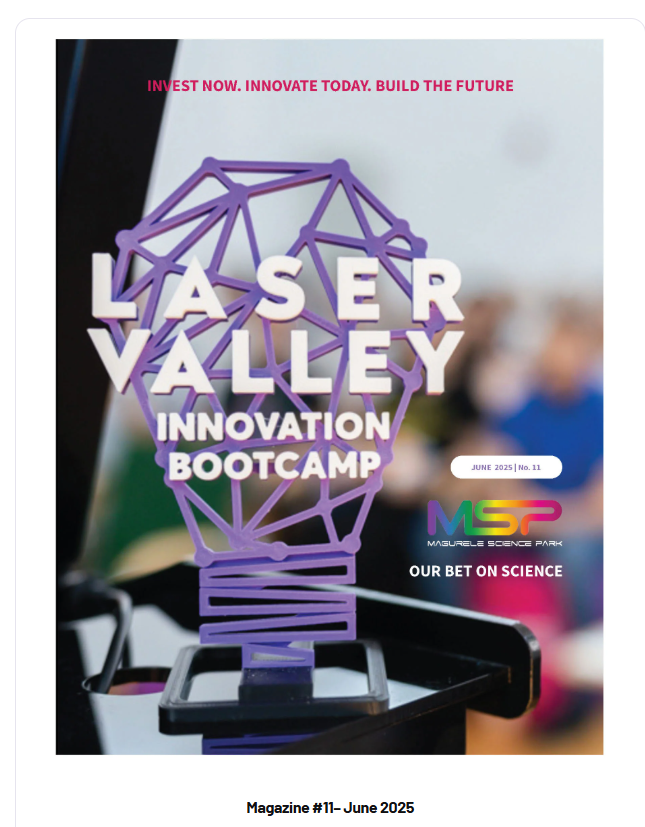
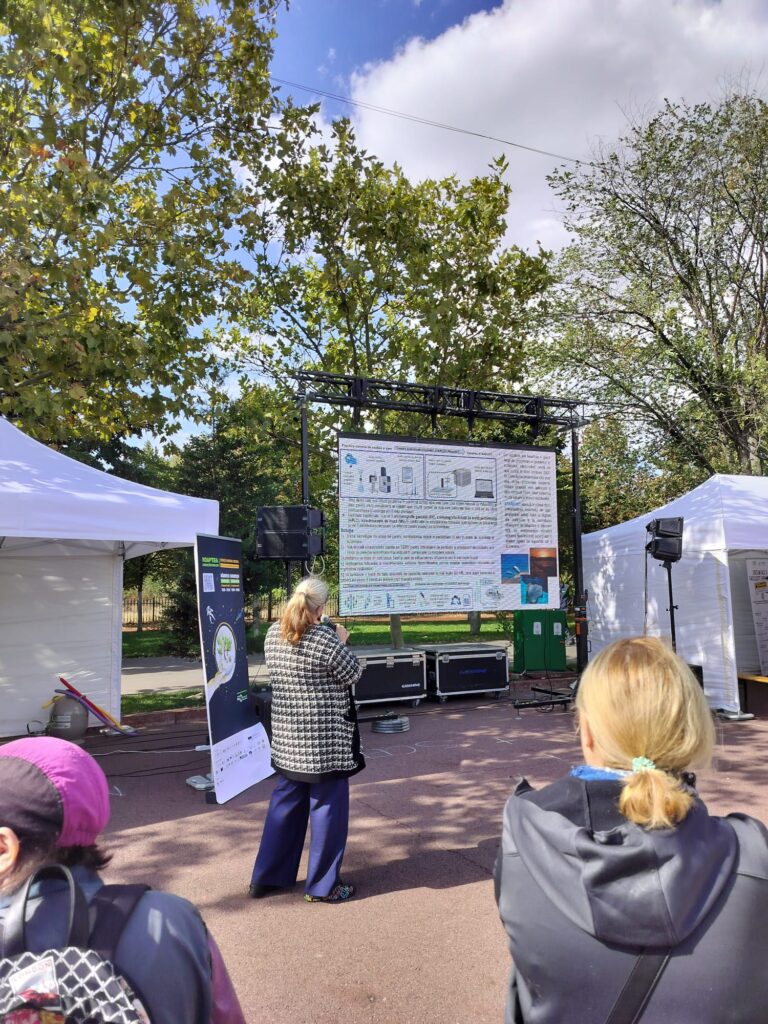
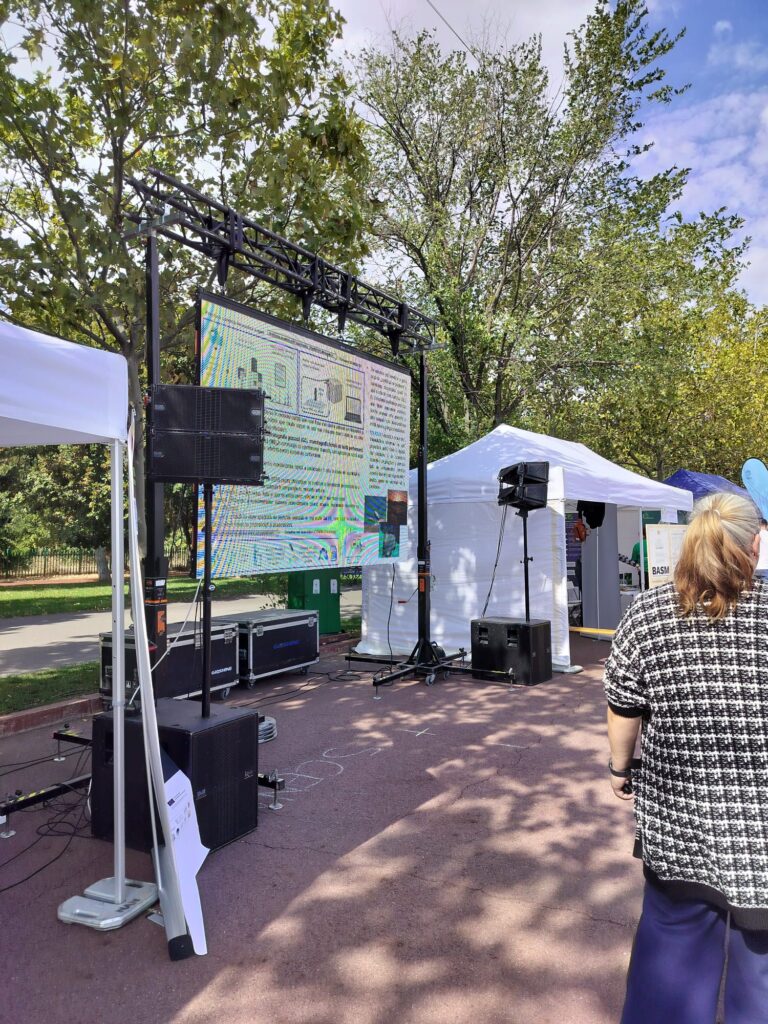
In addition to the activities mentioned earlier, a promotional article about the project was published in MSP Magazine No. 11 on pages 36-37, available in both Romanian and English. Furthermore, a dissemination event aimed at the general public took place during the "European Researchers' Night 2025," which was held on September 26-27, 2025.
From the point of view of the works submitted for publication, at the moment there are two contributions of the type - proceedings article, one being sent to INCDFM and one by IMT: : 1. I. -A. Baragau, O. Rasoga, A. Costas, H. -J. Albrechtsen, K. Gizynski, K. Milenko, E. Vereshchagina, J. Jose, F. Regan, Establishing a Raman spectra database for the detection of Terbuthylazine metabolites using SERS-based optical sensors, the 37th European Conference on Solid-State Transducers Eurosensors 2025 (EUROSENSORS XXXVII), 7-10 September 2025, in Wrocław, Poland – pages: 347-348, ISBN: 978-3-910600-07-2; 2. A. M. Baracu, A. Dinescu, K. Milenko-Kuszewska, O. Rasoga, I. -A. Baragau, TP7 – Metasurface development for SERS-based optical sensors, the 37th European Conference on Solid-State Transducers Eurosensors 2025 (EUROSENSORS XXXVII), 7-10 September 2025, in Wrocław, Poland -pages: 363-364, ISBN: 978-3-910600-07-2, and 1 review related to optical sensors and two full-length papers related to the data briefly presented at the conference are also in the works.
- I. -A. Baragau, O. Rasoga, A. Costas, H. -J. Albrechtsen, K. Gizynski, K. Milenko, E. Vereshchagina, J. Jose – SINTEF, F. Regan, MP72 – Establishing a Raman spectra database for the detection of Terbuthylazine metabolites using SERS-based optical sensors, pages: 347-348, pending doi: 10.5162/EUROSENSORS2025/MP72, ISBN: 978-3-910600-07-2
- A. M. Baracu, A. Dinescu, K. Milenko-Kuszewska,O. Rasoga, I. -A. Baragau, TP7 – Metasurface development for SERS-based optical sensors, pages: 363-364 pending doi: 10.5162/EUROSENSORS2025/TP7, ISBN: 978-3-910600-07-2
I. -A. Baragau, O. Rasoga, A. Costas, H. -J. Albrechtsen, K. Gizynski, K. Milenko, E. Vereshchagina, J. Jose – SINTEF, F. Regan, MP72 – Establishing a Raman spectra database for the detection of Terbuthylazine metabolites using SERS-based optical sensors, the 37th European Conference on Solid-State Transducers Eurosensors 2025 (EUROSENSORS XXXVII), 7-10 Spetember 2025, in Wrocław, Poland – poster.
Year 2024
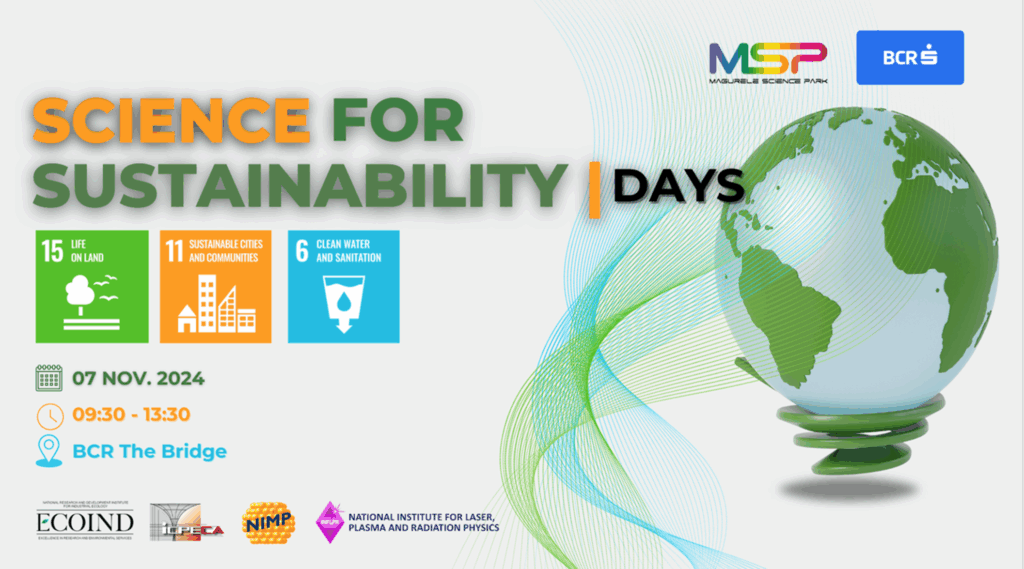
- November 7th – SCIENCE FOR SUSTAINABILITY I DAYS : The project was showcased during the “Science for Sustainability Days” initiative, which was organized by Măgurele Science Park in collaboration with BCR, INCD ECOIND, the National Institute for Lasers, Plasma and Radiation, ICPE-CA, and the National Institute of Materials Physics. This event provided a platform for the presentation of solutions aimed at addressing the challenges associated with the transition to a sustainable society.
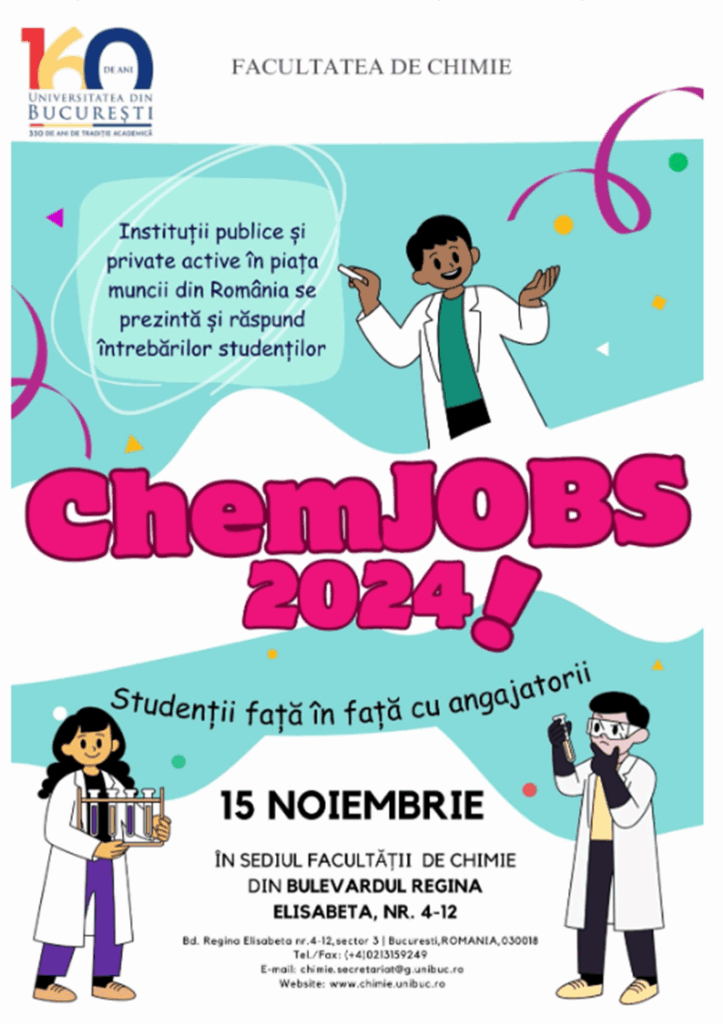
- November 15th– ChemJobs actions at the Faculty of Chemistry.The objective of the participation was to present the project and engage master’s students who are enthusiastic about contributing to the proposed topic.
Year 2025
- Promotion article in the MSP Magazine No. 11 -pg.36-37
“European Researchers’ Night 2025”, 26-27 Septembre 2025 ( Noaptea cercetatorilor europeni 2025) –
At the European Union level, the European Researchers’ Night is part of the Marie Sklodowska-Curie Actions series of the Horizon 2020 framework project. The event aims to show the general public what it means to be a researcher and how interesting research work can be.
PROJECTS / INTERNATIONAL PROJECTS